
AI CommerceSeptember 8, 20265 min read
The Volume Misconception: ChatGPT Ads Target the Person, Not the Prompt
Brands size ChatGPT ads like search: how often does someone ask about my category? Wrong picture. It targets the person and the purchases they have open.
By Satish Polisetti
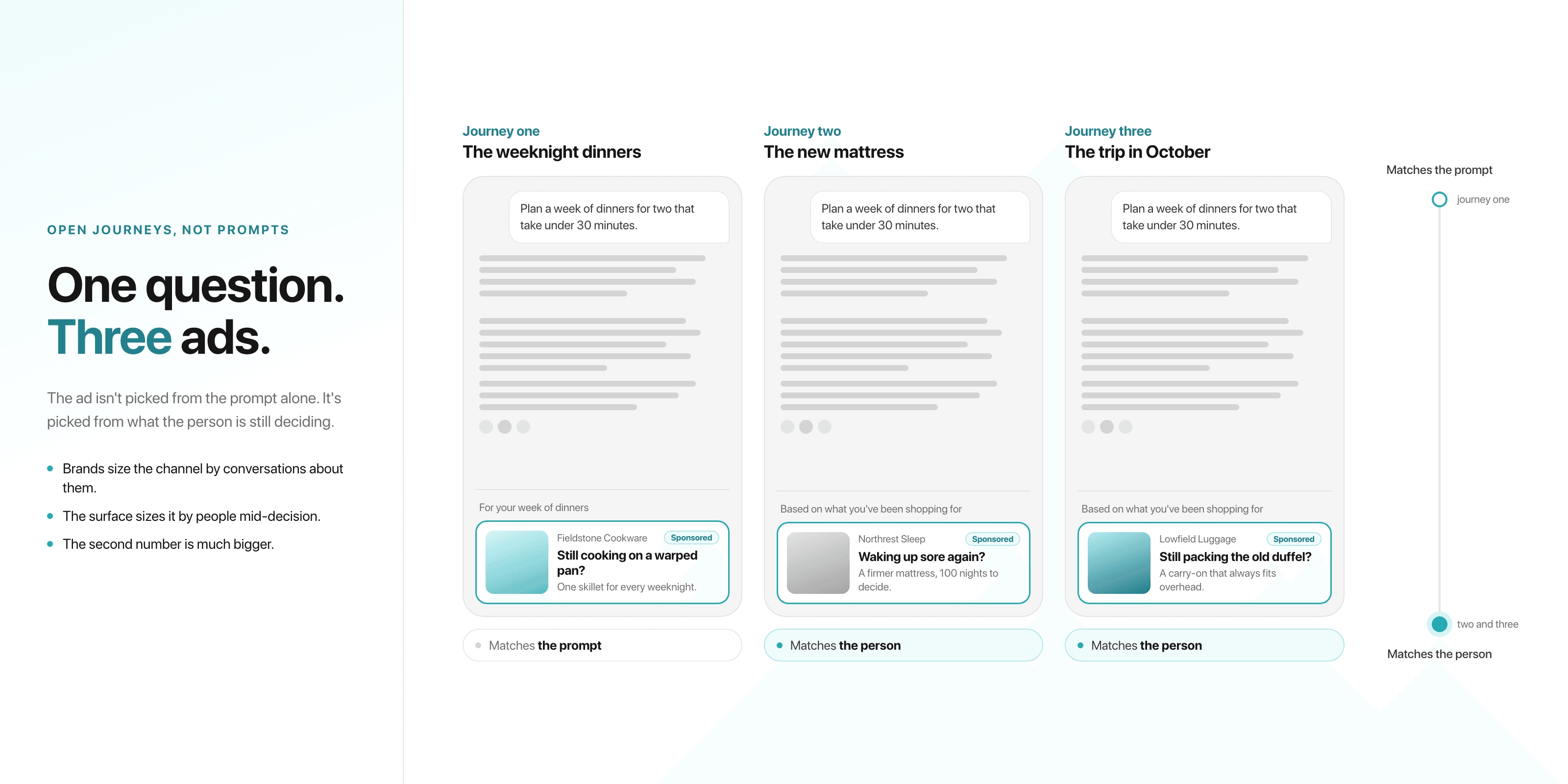
TL;DR Most brands are sizing ChatGPT ads the way they size search: how often does someone ask about my category? The surface targets the person and the purchases they have open, not the prompt. Your inventory is every conversation of everyone mid-decision.
Since ChatGPT ads opened in February, the question I hear most from DTC brands is not "should we?" It is "will we ever show up?" The worry goes: our product only comes up when someone asks about our category, most conversations are about homework and recipes, so the volume must be tiny and the channel can wait. That is not an objection. It is a misconception, and it comes from a single sentence.
Where the search picture came from
The sentence is from OpenAI's January announcement: ads would appear "when there's a relevant sponsored product or service based on your current conversation." Every media planner read it the way they read a keyword. The prompt is the query, the ad matches the query, the inventory is the number of prompts that match. But by the time the test launched in February, the ad was being picked from "the topic of your conversation, your past chats, and past interactions with ads," and the help center now says memory and recent chats count too. The prompt is one signal. It was never the only one.
OpenAI showed what that means in an advertiser webinar a couple of weeks ago: one person, one question, shown three times, with a different ad under the answer each time and a dial along the edge from contextual to personal relevance. Only the first ad sat at the contextual end. The other two matched the person, not the prompt.
Put that in DTC terms. A shopper asks for a week of dinners for two that take under thirty minutes. Under the answer, the first time, sits a skillet: it matches the prompt. The second time it is a mattress, because that shopper has spent a month deciding whether to replace theirs. The third time it is a carry-on, because there is a trip on the calendar. The mattress and the suitcase are not mistakes. They are the two purchases this person actually has open, and the dinner question was simply the conversation they happened to be having.
Open journeys, not prompts
Here is the model I carry away from that slide.
The person, not the prompt. The unit of targeting is a person with a history, not a query with a topic. The dinner prompt is one input. The mattress is the one with money attached.
Several journeys at once. Nobody is shopping for one thing. Dinner, mattress, trip: all open at once, and the surface can serve any of them in any conversation.
The nudge, not the pitch. An ad in that seat names an unfinished decision and offers to finish it. "Waking up sore again?" is not an introduction; it is a reminder. The surface exists to move people to the finish line of something they already started, and the line above each ad says which kind of nudge it is: this conversation, or what they have been shopping for.
One dial, two channels. The contextual end of that dial is search: the prompt is the query. The personal end is the feed: interests and behaviour. No surface has had both before, and no agency has a playbook for it. That is the reason to be early.
What this does to the volume question
Go back to the worry. "How often does someone ask about my category?" is the right question for search and the wrong one here. The right question is: how many people are, right now, in the middle of a decision my product ends? Then: how many conversations does each of them have while that decision is open?
The first number is closer to the size of your best interest audience than to your keyword report. The second number is the multiplier that search never gave you. A person researching a mattress does not ask about mattresses in most of their conversations. They ask about weeknight dinners, and a work email, and what to pack, and the mattress ad can ride along on any of them. Prompt volume undercounts it by design, and brands that size it that way will call the channel small and sit out the cheapest quarter to learn in.
I said in May that ChatGPT's format wasn't native yet. It still isn't. But the targeting under it is closer to the feed than to the search box, and it runs on a person who is, by definition, still deciding.
What to do before Q4 locks
-
List the journeys your product finishes, not the keywords it ranks for. "A firmer mattress before the baby arrives," not "mattress." Three to five, written the way a person would describe their own situation, because that is how the surface hears it.
-
Size the channel by open decisions, not by search volume. Pull your best-performing interest audiences and treat their size as the ceiling. Then assume each of those people has many conversations a week, and your ad is eligible in most of them.
-
Brief the ad with the journey. The help center names the advertiser's levers: the ad's title, copy, landing page, and the context hints you supply. Write the context hints as journeys, make the headline the question the person is already asking themselves, and land the click on the page that ends the decision, not on your homepage.
-
Fund a learning budget now, while Q4 plans are still open. No keyword tool or rate card will tell you which journeys this surface can close for you. Only running them will, and the brands that run them in September will have the answer when the holiday budget is set. The ones sizing it like search will have a spreadsheet.
The question was never how many people ask ChatGPT about your product. It is how many people are in the middle of a decision your product ends, and how many conversations they will have before they make it. If that number is large, the channel is already big enough. Is it?
Corrections and disagreements to satish@mightyai.app.